Thursday, 26 April 2012

Evaluation - Progression to the Full Product
Looking back, I think I have learnt quite a bit about the film production side, and what qualities are needed to make a decent opening to a film. Things like editing to the right angle, keeping a flow in the scene's instead of looking cut up and generally knowing when its best to change the point of view. I think that the camera work since the preliminary has developed and become stronger, by using certain shots and camera technique's like purposely shaking and slow tracking shots, has helped to establish the filming so that it looks far superior to the previous preliminary. Keeping schedules, writing storyboards and having the right location, may not have been a focus on the preliminary, but as the film has progressed, I have learnt how important these parts have to play in creating a achievable hidden footage opening.
Evaluation Question 6
I have learnt much about the technology whilst in the progress of making the film. The camera at the start was a struggle for me, since I wasn't exactly sure on the context of what the controls do. Whilst in the production, I was able to adapt these limited skills towards the filming by learning how to use the camera enough to be able to pretend to film badly. This gave me a better understanding of how the hidden footage genre must treat camera work as if you are back to the basic's. Another skill I learnt was how to use a tripod, and how the different levels help to create certain depth between scenes depending on the different angles used. Learning to use Adobe Premiere Pro was interesting as I was able to truly understand how editing changes the context of the film, and to make certain scenes work as well as piecing bits together to create a decent film out of the bits of footage.

Finally using still shots on the camera was a great technique to develop the opening credits which is called "Light Graffiti" this gave the film a spookier look by the use of slowed frame photo's


Finally using still shots on the camera was a great technique to develop the opening credits which is called "Light Graffiti" this gave the film a spookier look by the use of slowed frame photo's


Evaluation Question 5
We attracted our audience by submitting the film onto places like you tube and Facebook for feedback and a general viewing experience. This viral campaign allows a vast audience to be able to see the film rather spontaneously without having to deal with other problems like advertisement and waiting around. Sites like the one's we chose are popular with teenagers of today, so we also would be appealing to our target audience this way too. Bu using this technique we are able to cause a popularity increase as there is instant access, rather than newspaper clipping or TV interview.

The feedback of you tube plus the views indicates for a viral success perhaps a video sharing site isn't the best option as millions of films are posted everyday and it is hard for a single one to be found amongst the rest. If we were really to want critical acclaim, perhaps an advertising campaign would also be advised.


The feedback of you tube plus the views indicates for a viral success perhaps a video sharing site isn't the best option as millions of films are posted everyday and it is hard for a single one to be found amongst the rest. If we were really to want critical acclaim, perhaps an advertising campaign would also be advised.

The feeback from facebook on another matter is much more helpful. This shows that if we were to advertise the film around the web, perhaps a build up from a social site looks like a more efficient way to attract an audience than to go onto a site which millions used compared to a small number, just like the independent films probably would have done.
Evaluation Question 4
The audience for the film would be similar to the research of the target audience. For Hidden Footage films the audience would be generally a younger age between 18-30. This is because at this age, most people like frightening thrills, or gore depending on the variations of the genre, and will enjoy the threat and disturbance to normal life that horror films have to offer. Some people also would like the film, due to the coverage of the topic, because if people are fans of witch hunting, this is right up their avenue, as the mythology is a big thing around Pendle Hill. Another reason as to why students or older teens would want to watch the film because they are able to relate to the characters within the roles, and may be able to understand what they would experience.


Evaluation Question 3
The Media institutions that may distribute the Film would possibly be an independent company like Film4 that specialises in mostly UK small budget films, but has been known to collaborate with other companies like Working Title with films Shaun of the Dead and Trainspotting. It may be seen that the film could take the approach that Paranormal Activity took, by uploading it online to attract attention to other global media institutions like Paramount in this case, before buying the rights to the film and re-producing it. Most independent films usually stand in for film festival's to gain more popularity.


Another distributor that helps support independant Films within the United Kingdom, is StudioCanal UK (formerly known as Optimum releasing). Whilst StudioCanal helps to dsitribute independant films with both small and large budgets. (Attack the Block and Tinker, Tailor, Soldier, Spy to name a few)


These sort of independent companies would possibly distribute the film, due to a more artistic way of filming, rather than the large institutions like Universals aims only to create a profit. In a way companies like Film4 hardly create sequel's showing that they are more inclined to support films that are seen as culturally significant rather than generating money through merchandise and advertising.

Another distributor that helps support independant Films within the United Kingdom, is StudioCanal UK (formerly known as Optimum releasing). Whilst StudioCanal helps to dsitribute independant films with both small and large budgets. (Attack the Block and Tinker, Tailor, Soldier, Spy to name a few)

They also are one of the leading film compaines to distribute foreign films, so this would create a better global audience for independant British films as they would be distributed easily. If our film was picked up by an independant distrbutor, to acheieve international distribution, StudioCanal would be the way to go, rather than Film4 which is more related to a TV audience.


Wednesday, 25 April 2012
Evaluation Question 2
The Film represents the social group of teenagers/ students who perhaps have geeky tendencies or are particularly interested in home movies. It could also be said, the film leans more towards a white social background, as most hidden footage films represent a past time of filming in woodland over a scary mythical subject, that is stereotyped as a typical geeky thing to do that is culturally more significant in different racial classes than others.
Another social group our film seems to represent are a teens. Since the film focuses on a group of students who are creating a documentary style piece for a history study. This relates to a younger generation who would be used to seeing educational trips and events. Attempting to represent groups who would usually go on such trips for educational purposes was the general idea, as trying to represent an older group of friends, wouldn't really express real emotions on how difficult working on projects is, and that things can go wrong. By representing a younger teenager group, the film is able to express their own thoughts in such a situation, would it occur and how they themselves could connect with what the film is trying to portray, that perhaps the struggle over projects can go as wrong as becoming lost.


Another social group our film seems to represent are a teens. Since the film focuses on a group of students who are creating a documentary style piece for a history study. This relates to a younger generation who would be used to seeing educational trips and events. Attempting to represent groups who would usually go on such trips for educational purposes was the general idea, as trying to represent an older group of friends, wouldn't really express real emotions on how difficult working on projects is, and that things can go wrong. By representing a younger teenager group, the film is able to express their own thoughts in such a situation, would it occur and how they themselves could connect with what the film is trying to portray, that perhaps the struggle over projects can go as wrong as becoming lost.

Evaluation of Film Question 1
As our Film is within the Hidden Footage genre we were heavily influenced by the current conventions of certain media products. For instance The Blair Witch Project was viewed to be the best form of the genre, that was achievable to re-create a similar film within the group. We used the certain conventions like uncomfortable close-up shots of faces to portray the queasy feeling Hidden Footage films attempt to create to cause a reaction amongst the audience.


Another convention we used within the Hidden Footage genre is blurred, bad camerawork. This is necessary for the plot, as well as the effect for the film, since the bad camera work reflects the purposely mediocre skill of the students to create a more realistic feeling towards the film, and to make it more believable. The film uses this convention to seem as honest as possible to a real documentary and to keep the tone of the film at this point as gimmicky as possible, before the tension rises.


The Final convention we used was a "interview" scene. This is quite popular in Hidden Footage media products like REC, Blair Witch and even Cloverfield at times. This scene consists of a character talking, or discussing some information, possibly needed in the plot, whilst standing outside a location that links to the information. Using this convention helps to establish the plot and setting by briefly mentioning factors in a scene styled like a documentary.


For our Film, there wasn't really any development or challenging of the conventions of Media Products, because it was thought that to keep as truthful as possible to the media products, like Blair Witch helps to achieve a realistic and believe plot, setting and theme. If the conventions were challenged, or developed, like seeing ghosts or creatures, it wouldn't feel as natural as it possibly could be if we kept to the conventions used in the media products. Even films like Paranormal activity use the theme of not being able to see exactly what is going on, so if demons were included there wouldn't be much development anyway.


Another convention we used within the Hidden Footage genre is blurred, bad camerawork. This is necessary for the plot, as well as the effect for the film, since the bad camera work reflects the purposely mediocre skill of the students to create a more realistic feeling towards the film, and to make it more believable. The film uses this convention to seem as honest as possible to a real documentary and to keep the tone of the film at this point as gimmicky as possible, before the tension rises.


The Final convention we used was a "interview" scene. This is quite popular in Hidden Footage media products like REC, Blair Witch and even Cloverfield at times. This scene consists of a character talking, or discussing some information, possibly needed in the plot, whilst standing outside a location that links to the information. Using this convention helps to establish the plot and setting by briefly mentioning factors in a scene styled like a documentary.


For our Film, there wasn't really any development or challenging of the conventions of Media Products, because it was thought that to keep as truthful as possible to the media products, like Blair Witch helps to achieve a realistic and believe plot, setting and theme. If the conventions were challenged, or developed, like seeing ghosts or creatures, it wouldn't feel as natural as it possibly could be if we kept to the conventions used in the media products. Even films like Paranormal activity use the theme of not being able to see exactly what is going on, so if demons were included there wouldn't be much development anyway.
Organising Screening for Feedback
To get feedback for people view the film. It was decided that using social and media sites that focus on popularising topics. The first option to choose was to broadcast the film to a site that would branch out film in particular all over the world. YouTube would be the first response for being easy to access and a popular website for up and coming movie making. After creating a you tube account, the film was published the account and expressing that feedback would be helpful. Sadly only one comment was made but was positive, yet didn't contain ways in which we could improve, but neverthless encouraging.

Next we decided to be more social, and get our friends opinions on our film, as they would be able to be more critical on a more personal level which would help us create better ideas from more friendlier input. So, the film was put on Facebook, and this time there was negative and positive feedback, which would help us to improve what the general public thought was wrong with the film.


Next we decided to be more social, and get our friends opinions on our film, as they would be able to be more critical on a more personal level which would help us create better ideas from more friendlier input. So, the film was put on Facebook, and this time there was negative and positive feedback, which would help us to improve what the general public thought was wrong with the film.

Finally, I interviewed a few members of my family who watched the film, to give a general overview on what they thought was good, bad or needed improving. Here is an example:

This is Jane, and I asked her if she would be kind enough to just watch our film, and write down in a paragraph or so what she thought of it.

So as you can see, Jane overall liked the film, but thought we could improve perhaps on how slow the plot was, as she found herself a bit bored. Through interviews like this, feedback in a written form gives a bigger insight into what people want to express, but can't in a you tube comment. This would be the most efficient way of screening feedback as you get the most from it, and its a thoughtful opinion.
Reviewing progress of production and Post productin
Overall the progress of the post production has been slow. Most of the tasks like story boarding or filming didn't meet their deadlines and had to be rough drafts before being defined and completed properly. Although the team itself has worked very hard, producing new ideas all the time that provides good development where the Film is concerned in all parts,including scripting, plot line and props.

We had a minor issue over tapes and such to begin with too, early on we taped over some of our early footage ideas, so they were lost, and had to be done again. As we carry on tweaking at the film,problems tended to occur like cashing computers and missing memory sticks, but overall we have been able to overcome the problems we have been faced with and established a better understanding of having a decent production.

We had a minor issue over tapes and such to begin with too, early on we taped over some of our early footage ideas, so they were lost, and had to be done again. As we carry on tweaking at the film,problems tended to occur like cashing computers and missing memory sticks, but overall we have been able to overcome the problems we have been faced with and established a better understanding of having a decent production.
Planning a Shooting Schedule and shot list
Between Friday 10th February and Sunday 26th February we planned three weeks to get our film completed and done.
On the first week, we went on the Friday and attempted to film the Pendle Hill shots so we wouldn't have to go up there again. It turns out that whilst it was a lovely day, the footage taken couldn't be used for various reasons so we would have to re-shoot the footage again.

The Week commencing was Friday the 17th and going up to Pendle Hill again to shoot some more footage, but this time it was far too foggy to see anything, we got lost and eventually managed to stumble back to normal land, with no more footage than we had before.
The Final Friday we had which was the 24th, we went around the Pendle Village to film some little following bits before we got to the Hill. This was the most successful of the trips, but realising we hadn't enough footage it was decided on the Sunday that the rest of the filming was finished off, including the Pendle Shop, Outside the gates of Pendle Hill, and the small tracking shot towards the Hill.
On the first week, we went on the Friday and attempted to film the Pendle Hill shots so we wouldn't have to go up there again. It turns out that whilst it was a lovely day, the footage taken couldn't be used for various reasons so we would have to re-shoot the footage again.

The Week commencing was Friday the 17th and going up to Pendle Hill again to shoot some more footage, but this time it was far too foggy to see anything, we got lost and eventually managed to stumble back to normal land, with no more footage than we had before.
The Final Friday we had which was the 24th, we went around the Pendle Village to film some little following bits before we got to the Hill. This was the most successful of the trips, but realising we hadn't enough footage it was decided on the Sunday that the rest of the filming was finished off, including the Pendle Shop, Outside the gates of Pendle Hill, and the small tracking shot towards the Hill.
Sourcing People and Resources for the Shoot
For acting in the film, it was decided that using the team ourselves to act would be much more realistic in the sense that we would be on a more personal level with our film, as if we were actually making the hidden footage film. A few alterations to shooting days did cause for a member of the cast to become a younger student ( who evidently was my sister) who was alright at acting so was chosen as a camera person and did a decent job of it, and was prepared for what the role had to offer.

I collected the needed props for filming including the usual items needed in a camp site. These included:
3x Ruscksacks
2x Hats (One, may or may not have been used..)
Sandwiches
Water Bottles
A Map
And coats.

These items, if a little basic were just what the film needed to ensure a easier flowing story line by being more realistic as filmers wouldn't take much if they were doing a short half an hour film.
Story Boarding and Scripting video
To be able to start the film's progress, first we had to plot what actions were going to take place in the form of a storyboard. By gradually expressing how different scenes can be shown through story boarding, the film developed as the story boarding helped the films progress into a view able story line. (Unfortunately towards the end of the storyboard, we changed a little bit, so I've filled in the details we missed)


The script on the other hand was decided to be done (like most Hidden footage films) by improvising lines, but to have written out a general understanding of what was going to be said so it wasn't going to be completely lost. Sadly it didn't work out exactly as planned as quite a few of the conversations seemed to be repeated in different context. But here's the overview of the scripting.

Friday, 20 April 2012
Allocating reasearch and production roles
Separating the roles of production between the three of us, to focus on particular subjects, to help develop the film process quicker and more efficiently. Here are the jobs and who were allocated to them:
1. Researcher: Me and Kat
2. Planner : Me
3. Story boarder: Me
4. Scriptwriter: Matt
5. Location and Prop fixer: All shared equally.
6.Actors: Me and a fellow younger lady
7. Camera Operator: Kat
8. Director: Me
9. Editor: Matt
As a fellow producer of the film, I set to work plotting location spotting, rough storyboard ideas and the props, actors and directions needed within the film. To begin research on the Pendle Witches was a necessary part of the procedure on creating a more realistic filming experience. The research would give more to the story line, theme and context of the narrative and visual imagery. By using locations that were linked to our supernatural theme (Like Pendle Hill), this would improve the knowledge in creating a better script which, if a little basic to keep the film more realistic would include a sense of context (The script itself was written in a rough draft of basic requirement needed within filming, like certain points needed to be said in the plot. All in all we attempted to keep the dialogue and script unrehearsed and improvised, like most Hidden Footage films try to do, this would make the film seem more abrupt and raw to the footage.)
1. Researcher: Me and Kat
2. Planner : Me
3. Story boarder: Me
4. Scriptwriter: Matt
5. Location and Prop fixer: All shared equally.
6.Actors: Me and a fellow younger lady
7. Camera Operator: Kat
8. Director: Me
9. Editor: Matt
As a fellow producer of the film, I set to work plotting location spotting, rough storyboard ideas and the props, actors and directions needed within the film. To begin research on the Pendle Witches was a necessary part of the procedure on creating a more realistic filming experience. The research would give more to the story line, theme and context of the narrative and visual imagery. By using locations that were linked to our supernatural theme (Like Pendle Hill), this would improve the knowledge in creating a better script which, if a little basic to keep the film more realistic would include a sense of context (The script itself was written in a rough draft of basic requirement needed within filming, like certain points needed to be said in the plot. All in all we attempted to keep the dialogue and script unrehearsed and improvised, like most Hidden Footage films try to do, this would make the film seem more abrupt and raw to the footage.)
Deciding on the genre,approach and successfully pitching the idea
Deciding on a genre, it was thought the best possible one, that could achieve a realistic filming experience and wouldn't create unnecessary small budgets would be a hidden Footage film. As these films tend to cost little (unless private locations are needed, like the house scene in Blair Witch) and form a reasonable story line, it was seen as a good way to establish an interesting opening film. Since we had all the props and locations available to us on demand, and a small cast, it would be a perfect genre. Following the example of camping films, like The Blair Witch project, and Troll Hunter, by using supernatural elements and shaky camera footage rather than Paranormal activity would be a more reasonable option. Since Paranormal activity contains horror elements, but is filmed at a fixed point in the corner of a room. Sadly, the effects achieved in PA, are far too hard to recreate with no budget whatsoever, so this wouldn't be a good film opening.

To begin with the how the opening was going to start, the idea of a campfire and a ghostly creature, killing folk was used.Soon realising that the shooting of the film in the dark wasn't great, as you could barely see anything, and we couldn't afford night vision tech. Also, going straight into action was a bad idea as it wouldn't cause any suspense for the rest of the film, like Hidden Footage films achieve and it would make the film seem like it was getting cheap frights in exchange for an actual story line.
Dropping any death within the opening and developing an unknown force in an isolated area was the next best bet. As we were close to a witch haunting location (Pendle Hill) which itself can be isolated, misty and quite eerie. This would be perfect for the Hidden Footage genre, which required spooky sets to cause most of the frights. Creating a story line of a normal everyday History project concerning the Pendle Witches, where a group of students would investigate, eventually things going wrong, seemed like the usual opening of a Hidden Footage film.

By purposely using bad camerawork, unrehearsed lines for authenticity and not knowing exactly where to go once arriving at the location, would help create the perfect realistic atmosphere needed within the film.

To begin with the how the opening was going to start, the idea of a campfire and a ghostly creature, killing folk was used.Soon realising that the shooting of the film in the dark wasn't great, as you could barely see anything, and we couldn't afford night vision tech. Also, going straight into action was a bad idea as it wouldn't cause any suspense for the rest of the film, like Hidden Footage films achieve and it would make the film seem like it was getting cheap frights in exchange for an actual story line.
Dropping any death within the opening and developing an unknown force in an isolated area was the next best bet. As we were close to a witch haunting location (Pendle Hill) which itself can be isolated, misty and quite eerie. This would be perfect for the Hidden Footage genre, which required spooky sets to cause most of the frights. Creating a story line of a normal everyday History project concerning the Pendle Witches, where a group of students would investigate, eventually things going wrong, seemed like the usual opening of a Hidden Footage film.

By purposely using bad camerawork, unrehearsed lines for authenticity and not knowing exactly where to go once arriving at the location, would help create the perfect realistic atmosphere needed within the film.
Target Audience for Hidden Footage genre
The target audience for a hidden foootage film is paticulary tricky due to the number of possibilities withing the genre itself, unlike a vampire horror, that can be very limited in what themes its genre has.
For the Blair Witch Project, the target is limited slightly as the makers presented a marketing campaign which deliberately attempted to make the film seem actually "real". This effected how the film was perceived, as many believed that what they were seeing was the truth, and this put people off, especially since the filmmakers did not expect a wide release. This created a target audience who usually enjoyed, small cult independent films, possibly students. Due to a smaller budget than most horror films of the time, and a independent company backing them, the film wasn't exactly universally acknowledged till it had been circling around the media for a while, finally finding attention. The Filmmakers did not expect Blair Witch to be a critical success, so the target adudience was aimed at a smaller, more younger student type than the older audience it managed to achieve.

Paranormal activity on the other hand was picked up by an international company (Paramount) who found the independent film circling around the internet. and bought the rights to reproduce it into the cinema. By marketing the film globally with a huge budget backing, Paranormal activity was able to achieve a bigger target audience over a shorter time than even the Blair Witch was able to. The usual target audience for a marketed horror film, common with today's progressing film culture is 18-30's due to content of gore, violence and horror themes that a younger or older audience don't usually like.
Finally REC is a Spanish horror film, which was similarly marketed the same way as Paranormal Activity, and was released in cinemas and DVD (I think an american remake was done too). Sadly due to the language change, most Western countries are not keen to watch the film,limiting the target audience to that paticular country. Only those who generally enjoy horror films and are open minded to subtitles bother to watch, so the films target audience focuses on a smaller group than the Blair Witch project.
For the Blair Witch Project, the target is limited slightly as the makers presented a marketing campaign which deliberately attempted to make the film seem actually "real". This effected how the film was perceived, as many believed that what they were seeing was the truth, and this put people off, especially since the filmmakers did not expect a wide release. This created a target audience who usually enjoyed, small cult independent films, possibly students. Due to a smaller budget than most horror films of the time, and a independent company backing them, the film wasn't exactly universally acknowledged till it had been circling around the media for a while, finally finding attention. The Filmmakers did not expect Blair Witch to be a critical success, so the target adudience was aimed at a smaller, more younger student type than the older audience it managed to achieve.

Paranormal activity on the other hand was picked up by an international company (Paramount) who found the independent film circling around the internet. and bought the rights to reproduce it into the cinema. By marketing the film globally with a huge budget backing, Paranormal activity was able to achieve a bigger target audience over a shorter time than even the Blair Witch was able to. The usual target audience for a marketed horror film, common with today's progressing film culture is 18-30's due to content of gore, violence and horror themes that a younger or older audience don't usually like.
Finally REC is a Spanish horror film, which was similarly marketed the same way as Paranormal Activity, and was released in cinemas and DVD (I think an american remake was done too). Sadly due to the language change, most Western countries are not keen to watch the film,limiting the target audience to that paticular country. Only those who generally enjoy horror films and are open minded to subtitles bother to watch, so the films target audience focuses on a smaller group than the Blair Witch project.
Thursday, 19 April 2012
Film Opening sequences and their conventions
We looked at a number of film opening's in the hidden footage genre and came across a few examples, and how most of the films relating to the genre seem rather stereotyped.
Firstly, looking at the way the film,REC is organised, it starts with a newsreport next to a fire station.This may seem bland, or possibly boring, but helps to cause a sense of false security before quickly building up to the real tension of the film when they enter the building.
The newsreport also helps to develop the storyline, setting and characters withing the script, and as it is a hidden footage film, it does not need credits in order to make the film realistic and actually looking like it has been discovered.

Next, looking at the Blair Witch project which starts with the writing stylized and describing the events that you are about to see.Using this technique at the start puts the audience in the scene, like looking at personal footage.This helps the audience to connect with the hidden footage and not pass it off as something boring. The use of plain footage helps the development of the storyline and focuses the imagery for a bigger shock when things starts to go wrong.

Firstly, looking at the way the film,REC is organised, it starts with a newsreport next to a fire station.This may seem bland, or possibly boring, but helps to cause a sense of false security before quickly building up to the real tension of the film when they enter the building.
The newsreport also helps to develop the storyline, setting and characters withing the script, and as it is a hidden footage film, it does not need credits in order to make the film realistic and actually looking like it has been discovered.

Next, looking at the Blair Witch project which starts with the writing stylized and describing the events that you are about to see.Using this technique at the start puts the audience in the scene, like looking at personal footage.This helps the audience to connect with the hidden footage and not pass it off as something boring. The use of plain footage helps the development of the storyline and focuses the imagery for a bigger shock when things starts to go wrong.

Wednesday, 18 April 2012
The Generic convention of The hidden footage genre
In hidden Footage films, there are many Generic conventions that help to establish and distinguish how the film fits within the genre.
More often than not, because the genre is slightly more horror related, someone with a small role is going to die at the beginning, and this will show how serious things are going to get within the film. Sometimes the death is used to create a dramatic effect, especially if everything's been on the quiet side recently...
Effects used in Hidden Footage films, like grain, shaky camera's and Close-up's of the face when directly speaking to camera, either to emphasize a point, or something awful is happening and the camera cannot focus. Other convents could be they way there is always a sense of mystery and the unknown, as more often than not, hidden footage films never explain reasoning for these creatures, due to the "cameraman" being within a point of the event that isn't a story, just his point of view. For this genre, especially it is known that the quality of filming may be mediocre at best, almost unprofessional like and with added mistakes. These are purposely created to give a sense of authenticity, something I think would be valuable to take into account when we create our own opening to the hidden footage genre.
 Grain used in Hidden Footage, mirrors the effect present in the old black and white horror films that coincidentally created a sense of fear and tension due to the darker shadows and merging scenery.
 Close-ups within films, usually indicate a sense of tension, or danger, as the camera is in the characters personal space, which can be seen as invasive and dramatic.This helps to hightlight the fact that in these paticular scenes, the characters are close, becoming uncomfortable to the audience as well as the film, already creating a certain emotion without having to progress the story on further.
More often than not, because the genre is slightly more horror related, someone with a small role is going to die at the beginning, and this will show how serious things are going to get within the film. Sometimes the death is used to create a dramatic effect, especially if everything's been on the quiet side recently...
Effects used in Hidden Footage films, like grain, shaky camera's and Close-up's of the face when directly speaking to camera, either to emphasize a point, or something awful is happening and the camera cannot focus. Other convents could be they way there is always a sense of mystery and the unknown, as more often than not, hidden footage films never explain reasoning for these creatures, due to the "cameraman" being within a point of the event that isn't a story, just his point of view. For this genre, especially it is known that the quality of filming may be mediocre at best, almost unprofessional like and with added mistakes. These are purposely created to give a sense of authenticity, something I think would be valuable to take into account when we create our own opening to the hidden footage genre.

Monday, 16 April 2012
Hidden Footage and Horror Genre development.
As we decided to do the Genre of a hidden footage horror, I thought it would be a good idea to research into a variation of films, hidden footage, and horror films alike. The first question was what monster was to feature in the film. Zombies are quite popular with this genre, as within these films,cast members are usually eaten in gory ways, and by leaving tapes behind gives the film a chance to "Kill all the survivors" that is popular in the hidden footage genre as you don't need anyone left to progress the story as its already happened.
Firstly, I attempted to look at zombie films in general and how they handled themselves. Looking at films like the original "Night of the living dead" is a good example of the zombie genre.
 Being a black and white film around the time of 1968, Night of the living Dead has become a classic within the horror genre, thanks to creepy, yet unrealistic settings, shambling radioactive zombies and the isolation of being trapped in a farmhouse. Due to low budgets, and probably the time period, the effects aren't amazing (chocolate syrup for blood, wonky gravestones and such) but this, in its own right, helps to establish the film as a cult classic by creating a captivating, yet bleak atmosphere that at its time helped to create a general public appetite for these kind of films. What Night of the living dead seems to achieve as a zombie genre, is that while it may look corny, the use of genre conventions (isolated, spooky settings, soundtracks of eerie noise and cliche horror elements).
If I was to use zombies as the creature within our hidden footage, I would have to take into account the style of the horror genre that is perceived today, which is used to fast, energetic zombies who have mutated from viruses.As Night of the living dead contains similarities with the Hammer horror generation, or perhaps on the verge of breaking from those stereotypes, most people wouldn't be interested in a black and white film with faulty sets, so sadly this wouldn't be the best zombie film to pick.
Next I looked at Shaun of the dead, as a contradiction to the usual zombie genre as it its a romantic comedy as well as having the undead. Realising we wouldn't be spoofing a hidden footage film, I used this film mainly as an example as to the sort of audience that enjoys today's horror film. As Shaun of the dead did both well in the UK and USA, it was seen as a rather decent comedy horror. When compared to other films in its genre like Scary Movie, is seen as a perfect example of a homage to a film.

Sadly we realised that if we were to do a realistic hidden footage zombie film, we would require a large cast of zombies, that would probably wouldn't look frightening enough and would also need a place, which was to look perhaps, barricaded and isolated, which we possibly couldn't find without having to create a budget. So sadly the zombie Idea was dropped.


Firstly, I attempted to look at zombie films in general and how they handled themselves. Looking at films like the original "Night of the living dead" is a good example of the zombie genre.

If I was to use zombies as the creature within our hidden footage, I would have to take into account the style of the horror genre that is perceived today, which is used to fast, energetic zombies who have mutated from viruses.As Night of the living dead contains similarities with the Hammer horror generation, or perhaps on the verge of breaking from those stereotypes, most people wouldn't be interested in a black and white film with faulty sets, so sadly this wouldn't be the best zombie film to pick.
Next I looked at Shaun of the dead, as a contradiction to the usual zombie genre as it its a romantic comedy as well as having the undead. Realising we wouldn't be spoofing a hidden footage film, I used this film mainly as an example as to the sort of audience that enjoys today's horror film. As Shaun of the dead did both well in the UK and USA, it was seen as a rather decent comedy horror. When compared to other films in its genre like Scary Movie, is seen as a perfect example of a homage to a film.
 Another factor as to why the film stands out, is perhaps the fact that the film is essentially British. Using a relatively known comedy cast, the film enables itself to seem quirky, in comparison to the thousands of American horror films. By adding the comedy element, the genre is able to develop a bigger audience. If we were to do a Zombie hidden footage, then I wouldn't try to spoof a hidden footage, as its supposed to be realistic, so Shaun of the Dead is just an example of the different themes within the genre of the zombie flick, and to see the elements that helped to create success. The final Zombie related film I looked at was Diary of the dead. This was a perfect example of the hidden footage film, by having the same type of characters as we wanted to use (students) and more or less a perfect, urban setting. By using a younger cast, the film is able to connect with a younger themed audience that seem to take up the majority of the horror viewings these days thanks to Scream or Saw. |

This in itself would be a perfect example of how we could feature our own hidden footage, with the use of grainy effects, shaky camera movements, and dramatic off screen encounters found within the film.
Sadly we realised that if we were to do a realistic hidden footage zombie film, we would require a large cast of zombies, that would probably wouldn't look frightening enough and would also need a place, which was to look perhaps, barricaded and isolated, which we possibly couldn't find without having to create a budget. So sadly the zombie Idea was dropped.
Instead we opted to do a more supernatural theme, like what is seen in the Blair Witch project and Paranormal activity. Not wanting to do a similar style like Paranormal activity, where there is a fixed point in the room that records the footage, it seemed that this would be too difficult to create a naturally realistic effect in this way with what we could do, so Paranormal activity was out of the question.

Another of the film examples we looked at was the Blair Witch project, which seemed like a good idea to develop into our own opening, because the start of the film is set out, as a rather bland outing of some students who are going through their day to day basis of checking equipment and location. This idealistically was a perfect film genre as we could recreate a similar atmosphere, and we had the location of the Pendle Hill which is surrounded by witch folklore at our disposal, as it is also a regular walking site. The Blair Witch project is another cult classic, that was made with a small budget and basic equipment, yet created a scary, horrifying film. I think at this rate of the planning, getting a cult audience was probably our best bet, as it appeals to a younger, quirky group.

Sunday, 15 April 2012
Ideas for Film genre
So, starting this blog, I shall discuss the themes that were mentioned during a group talk about the genre our film wanted to take.

I imagine how the beginning credits would pan out, thinking that the hero would answer a phone-call as he was scribbling notes, which the notes themselves would hold the credits to the film in bold, and as he flips each page to write more notes about the Russian Mafia's evil plot, the credits of each category would be on each lined pad, as he listened to their request. The camera itself would focus on these close ups of the hand with the scribbling which held the credits, with the occasional MS of the hero's face to see his expression change from casual to angry as the phone-call progressed. I also wouldn't show the Mafia at this moment, instead a CU of a shadowed hand holding a phone, giving directions, as this would cause a sense of suspense of who this mystery person could be.
 I'm probably thinking along the lines of a bond villain here, but that's a general idea, so I won't get carried away, but I'm trying to say, that sort of cliche. This would have been a great idea, to shoot for different camera angles, but as a group, I think we wanted to be more personal within the roles and didn't want to get older actors.
The second idea for the genre film was a Hammer Horror or Universal horror film, from any of the time periods. I preferably would have sticked to Hammer Horror as its more British toned, even though films like "The Man who laughs" and "Frankenstein" were supposed to have elements of British culture in the films.


If we were to film a Hammer Horror film, perhaps the most make-up efficient wise would be Dracula, as he required very little to look convincing Again we would probably have to get an older actor to play him if we were going to feature Dracula in the film.Yet Christopher Lee in one particular Dracula film, only was present for a whole 8 mins! so I probably wouldn't have him feature in the opening credits which is a shame. Although if I am mistaken, in Prince of Darkness, Dracula was featured straight away being resurrected by his slave/creature thing, but I think it would be wiser to stick to the more common, story line panning scene's as to get a general sense of the story.

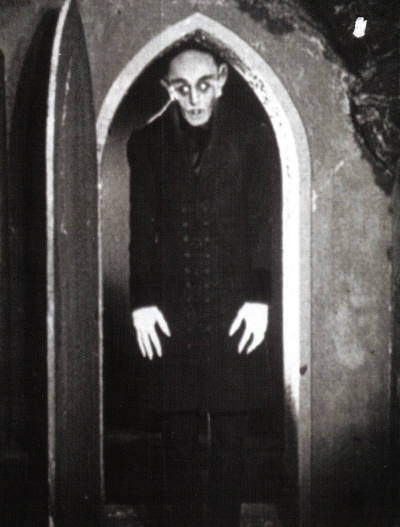
The beginning credits would probably start (in black and white) with the framed, hand written blood font to give credit to the stars and crew (see image below) and have Jonathan Harker stumbling around in dark,creepy sets (probably made of cardboard) trying to find his way to Count Dracula's castle, with very limited interaction and mostly tracking shots of the person who plays Harker walking around, and maybe using a few MS to show his fear over the whole scenario. To do this genre would be fun, but again we would have to use slightly older actors, not many camera shots and no interactions, that basically would make the 2 minutes rather boring, and nothing much happening, so we decided not to go with this idea.

Our Final idea, again was horror, but a more stylized hidden footage, like Blair Witch, Troll Hunter, Rec and Paranormal Activity. Over the years these films had become more popular, and had gained different techniques how to film, like Cloverfield being CGI movement, while Blair Witch Project used a more psychological effect of not really being able to see it. We thought we should stick to a more Blair Witch project type, as this was easier to create effects and more stylized to recreate realistic footage. Our idea was for the credits, to have the crew exploring a pendle hill outing, and the normal interactions that you would find in a camping trip with social friends. By using gimmicky actions, like awkward zooming, and having the camera going in and out of focus, we are able to create a sense of falseness to the film to make up for limited camera angles that you find in this genre.


We finally decided that the Hidden Footage was the best genre to film, as we could explore its content and re-create a film opening with our own image in mind, instead of copying things like Dracula and Taken plots.
So, Pendle Hill Horror awaits! :)
(If there are any mistakes, please excuse them. )
Firstly, we had the idea of a Taken sort of film, you know, the one staring Liam Neeson. In the story line a friend/family member would be kidnapped by some Russian mafia, and these thugs request our anti-hero to give them some money, because obviously the hero just has to have this sort of money doesn't he. So instead of forking over, he gets really angry and decides to hunt them down.

I imagine how the beginning credits would pan out, thinking that the hero would answer a phone-call as he was scribbling notes, which the notes themselves would hold the credits to the film in bold, and as he flips each page to write more notes about the Russian Mafia's evil plot, the credits of each category would be on each lined pad, as he listened to their request. The camera itself would focus on these close ups of the hand with the scribbling which held the credits, with the occasional MS of the hero's face to see his expression change from casual to angry as the phone-call progressed. I also wouldn't show the Mafia at this moment, instead a CU of a shadowed hand holding a phone, giving directions, as this would cause a sense of suspense of who this mystery person could be.
The second idea for the genre film was a Hammer Horror or Universal horror film, from any of the time periods. I preferably would have sticked to Hammer Horror as its more British toned, even though films like "The Man who laughs" and "Frankenstein" were supposed to have elements of British culture in the films.

If we were to film a Hammer Horror film, perhaps the most make-up efficient wise would be Dracula, as he required very little to look convincing Again we would probably have to get an older actor to play him if we were going to feature Dracula in the film.Yet Christopher Lee in one particular Dracula film, only was present for a whole 8 mins! so I probably wouldn't have him feature in the opening credits which is a shame. Although if I am mistaken, in Prince of Darkness, Dracula was featured straight away being resurrected by his slave/creature thing, but I think it would be wiser to stick to the more common, story line panning scene's as to get a general sense of the story.
The beginning credits would probably start (in black and white) with the framed, hand written blood font to give credit to the stars and crew (see image below) and have Jonathan Harker stumbling around in dark,creepy sets (probably made of cardboard) trying to find his way to Count Dracula's castle, with very limited interaction and mostly tracking shots of the person who plays Harker walking around, and maybe using a few MS to show his fear over the whole scenario. To do this genre would be fun, but again we would have to use slightly older actors, not many camera shots and no interactions, that basically would make the 2 minutes rather boring, and nothing much happening, so we decided not to go with this idea.
Our Final idea, again was horror, but a more stylized hidden footage, like Blair Witch, Troll Hunter, Rec and Paranormal Activity. Over the years these films had become more popular, and had gained different techniques how to film, like Cloverfield being CGI movement, while Blair Witch Project used a more psychological effect of not really being able to see it. We thought we should stick to a more Blair Witch project type, as this was easier to create effects and more stylized to recreate realistic footage. Our idea was for the credits, to have the crew exploring a pendle hill outing, and the normal interactions that you would find in a camping trip with social friends. By using gimmicky actions, like awkward zooming, and having the camera going in and out of focus, we are able to create a sense of falseness to the film to make up for limited camera angles that you find in this genre.
We finally decided that the Hidden Footage was the best genre to film, as we could explore its content and re-create a film opening with our own image in mind, instead of copying things like Dracula and Taken plots.
So, Pendle Hill Horror awaits! :)
(If there are any mistakes, please excuse them. )
Subscribe to:
Comments (Atom)